Light as a Civic Act: The Lighting Design Project of Baia Station
There is a moment, descending into the new Baia station, when the traveler ceases to be a commuter and becomes something else. It is not an effect created by signage, nor produced by technology: it is produced by light.
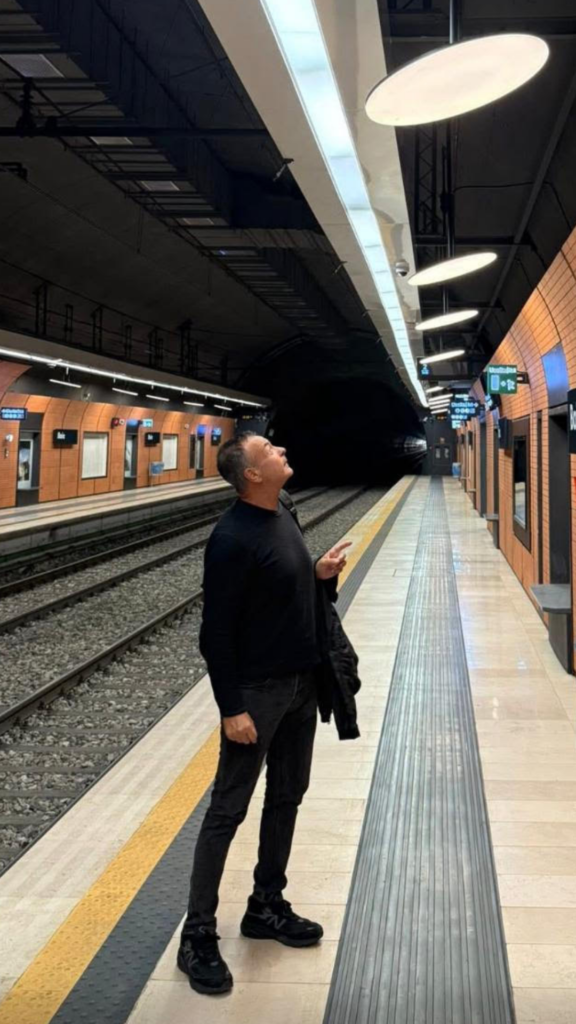
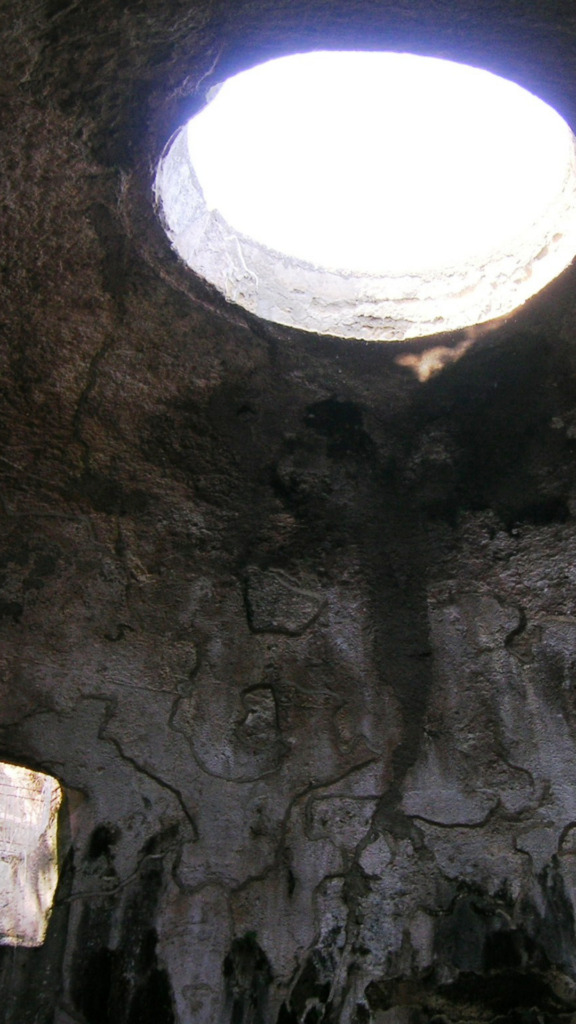
In Studio Od’A’s design, large circular skylights pierce the roof and bring the Campanian sky into the underground spaces. That warm, oblique, seasonal light is not decoration. It is a poetic statement. It says: “You are underground, but you are not in darkness. You are in a place that has chosen to remember.”
Anyone who works with light knows that every lighting project is, ultimately, a series of moral decisions, and Baia is a place that immediately made me feel the weight of this responsibility: what to reveal, what to leave in shadow, what hierarchy to establish between things and their contexts. These decisions carry an unusual weight, because the context is not neutral: it is one of the most historically charged territories in the Mediterranean, a place where beneath every meter of soil lies another layer of time.
Light as Threshold: Designing Perception in Liminal Spaces
The ancients had precise words to name places of transition.
Limen, in Latin: the threshold, the point at which one condition transforms into another. Stations are, by definition, liminal spaces. One does not live in a station; one passes through it. And the lighting designer working in such spaces works with something subtler than photometry: they work with the perception of change.
At Baia, the transformation is threefold. One moves from outside to inside, from surface to depth, from the present to what the present contains.
The question every lighting designer should ask is not “how many lux,” but rather “what kind of transition do I want to create in the visitor’s perception?”
The circular skylight — a form that echoes the nearby Temple of Mercury, that Roman dome anticipating the Pantheon by centuries — together with every solution adopted in the lighting design, is not merely a technical device. It is a citation. A gesture through which the project declares: here, history enters from above, just as it has always entered places devoted to worship and wonder.
Light as a Moral Act: Illuminating Baia Between History and Design Responsibility
Baia station opened in November 2025, after twenty-five years of closure. A quarter of a century during which this territory — already marked by bradyseism, already penalized by insufficient investment — lived without this connection. The construction site, opened in 2005 and halted for years by legal disputes, remained a visible wound in the urban fabric.
To illuminate this space, finally, was for me and my team also an act of restitution. And anyone designing light in a place so burdened with expectation cannot pretend otherwise. Every lighting choice is also a choice of meaning: what is celebrated, what is commemorated, what is left in shadow.
The light that celebrates ancient Roman Baiae coexists, outside this station, with a territory that remains fragile. Light as a moral act means holding these two truths together: illuminating the past without obscuring the present.

To Descend Is to Remember: Light, Shadow, and Memory in the Phlegraean Fields
For the Greeks, and later for the Romans, the Phlegraean Fields were the landscape of the afterlife: it was here that Virgil set Aeneas’ descent into the Underworld. Digging into these soils is always, in some way, an act that touches death, and it is no coincidence that tombs from the first century BC resurfaced during the works.
The light accompanying the traveler along this descending path cannot be reduced to functional illumination that neutralizes space. It must construct it, give it temporal depth. What distinguishes a great lighting project from one that is merely competent yet inert is the ability to make us feel that light is not there “despite” the darkness, but “together with” it.
In the Baia project, the lighting solutions bring light, but also define — through contrast — the shadowed areas, the transitions. And within these transitions dwells something akin to what the Greeks called metaxy: the space between the threshold and the point where categories cease to remain rigid.
A Museum to Pass Through: Lighting Design Between Flow and Perception
Baia station is a museum station. But it is worth pausing on the difference between a museum one visits and a museum one passes through. In the former, light is stationary, serving the object, calibrated for those who stop. In a station, the traveler is moving, often in haste. Light must communicate within moments, creating meaning without interrupting the flow.
Phenomenology teaches us that perception is always faster than conscious thought. One sees before realizing one has seen. The lighting design of a museum station is therefore an exercise in poetic writing: it must create a lasting impression through fleeting means. Like a verse that is never forgotten, even without being fully understood.
Designing light in this space meant entering into dialogue with its natural light — not ignoring it, not fighting it, but interpreting it where it could not reach. Bringing light into the underground Phlegraean landscape, an environment preserving fragments of a civilization buried for two thousand years, is a gesture that goes beyond technique.
Light, when designed with this awareness, is not a service: it becomes a civic act.
Text by:
Sergio Marzocchella
Engineer and AILD member