


SMOOTH LIGHT – The importance of reclaiming perceptual comfort in one’s own home
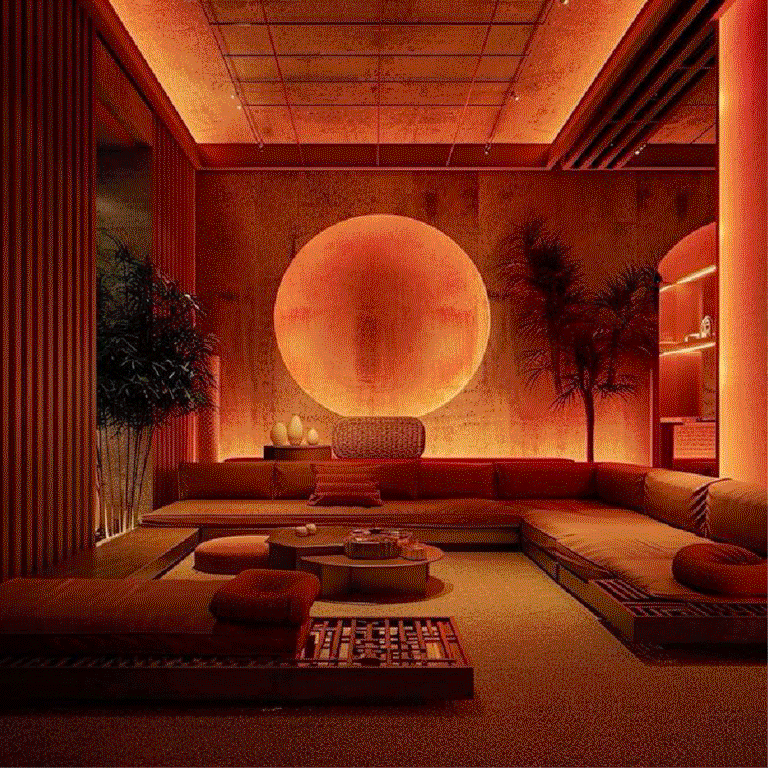
In the spaces of our private lives, the eye particularly appreciates comfortable light, just as much as our feet appreciate a pair of soft slippers. Even beyond the walls of the home, no one would ever complain about being able to experience that same comfort. Yet the home is still that special refuge where we can experience protection and psychophysical regeneration, and biology is an infallible detector that establishes whether the requirements of balance are satisfied or, instead, triggers discomfort in the presence of some “distortion.”
SMOOTH LIGHT is that particular distribution of light in space that expresses a pleasant and delicate fluidity, where there are never aggressive peaks of brightness generated, for example, by an exposed source; where shadows are soft and balanced; and where the visual reading of space is simply perfect. Such a luminous environment is an elixir of well-being, from every point of view.

REVERBERATION
A blow that bounces back
One of the main secrets of smooth light is reverberation.
To understand the concept of light reverberation, it is very useful to listen carefully to the sound of its Latin etymological root, re-verberare, in which re is a prefix indicating a return, while verberare literally means to strike, to hit. In essence, reverberation is a vigorous impact that comes back, like a mass of seawater hurling itself against a cliff and being forcefully repelled, or like a sound wave trapped between the walls of a cave, bouncing within it and forcing the air to vibrate again and again: the echo. In short, to reverberate means to return the blow, every time it is delivered.
Pillars of science such as Anaxagoras, Leonardo da Vinci, and Galileo Galilei theorized extensively on this behavior of light. But the discovery that we see everyday objects only because they reverberate ambient light in all directions is owed to the Arab scientist Ibn al-Haytham, known in the West as Alhazen, 965–1040 AD. In his monumental Book of Optics (Kitāb al-Manāẓir), he demonstrated that:
- Light travels from a source, such as the Sun or a candle.
- Every point of an illuminated object bounces light rays in every direction.
- These reverberated rays then strike the eye, allowing us to identify and scan the object.
This seems obvious today, but at the time it was almost heresy because, according to the dogmatists of the period, light originated from the eye itself.
The scientific exploration of this elementary yet fundamental behavior later revealed the nature of light as a wave, but also as an elastic and extremely rapid corpuscular mass.

This necessary in-depth examination is intended to clarify how the generic expression indirect light essentially limits the depth of understanding granted instead by the complex phenomenon of reverberation. Indeed, it is not so much the what — that is, striking and bouncing — but the how that proves highly interesting and of great practical use in understanding the interaction between light and matter. An interaction which, it is worth emphasizing, is the foundation of our perception of space: our ability to move through the physical world, in the best or worst possible way.
Let us mentally return to our home. The most common scenario in a domestic space consists of many objects which, to simplify, have surfaces that appear rough, or matte, at a microscopic level, and a smaller number of objects with specular surfaces, such as glass, mirrors, and polished metals — unless we happen to be in the Hall of Mirrors at Versailles, but that would be another interesting story.
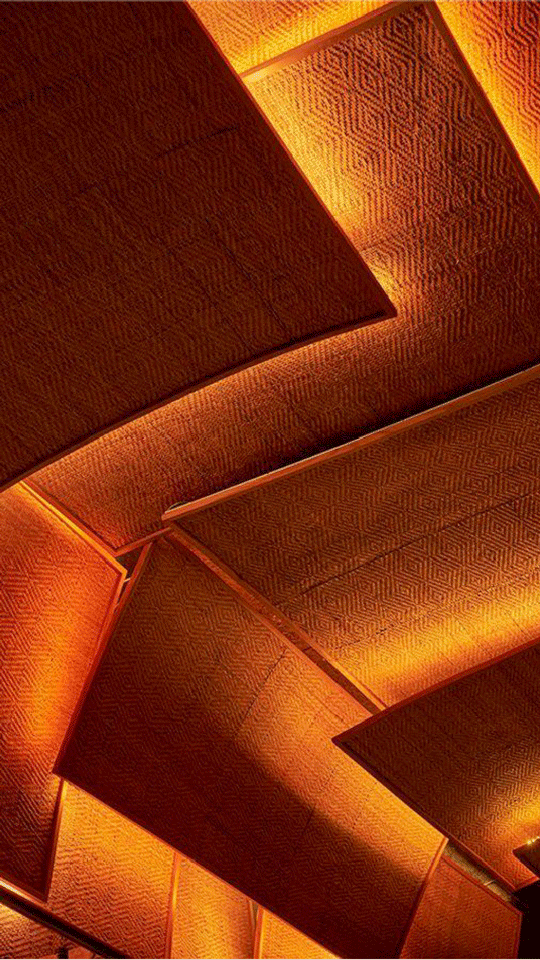
Of these two actors, it is the rough ones that play the most important role in building a smooth luminous environment, because of their ability to distribute the mass of photons over a wide range. If we consider the quantity, diversity, and complexity of the forms and spatial arrangements of everything that makes up a domestic space — volumes, finishes, furnishings, decorations, and colors, to name just a few — it becomes understandable how even a sophisticated, latest-generation LED lighting device equipped with the best diffusion optics would not be sufficient to excite the many harmonic potentials of the space. Only a preliminary and careful study of the bounces, on the basis of which a technological execution strategy can be built, could achieve this result. And it would allow us to instinctively enjoy that beauty, with equal satisfaction from whatever optical angle we position ourselves.
THE TRANSFORMATION OF LIGHT IN SPACE
A journey from the source to the human eye
Light that reverberates is never identical to how it originally began.
The luminous flux emitted by the source has its own precise identity card — in other words, the parameters listed in the technical data sheet of the fixture. But then it inevitably and repeatedly collides with the surfaces of matter, which absorb part of its energy and alter its features of intensity and chromaticity before bouncing it in directions dictated by matter itself according to its molecular consistency. It is therefore correct to say that, from that moment on, light carries with it the memory of the matter it encounters: the greater the number of encounters, the greater the transformation of the light before it reaches our eye.
If a flow of white light bounces, for example, off a red wall*, our eye will receive reddish light that is less intense than the light emitted; but if the wall is half painted red and half blue, our eye will perceive violet light that is even less intense. The simplification just described hides a small *optical illusion: what we actually capture with the eye is the frequency, or mixture of frequencies, that matter rejects in this encounter; therefore, it is correct to state that the wall is anything but red or blue.

In the essence of lighting design, this knowledge has very strong implications for the creation of the final luminous scene in an environment. What is at stake is not only the functional livability of the various domestic spaces, but above all the harmonic perception that our brain still processes today in an ancestral way for each of the functions assigned to those environments. Beyond changing design trends, styles of form, and cutting-edge technologies, the fact remains that harmonic perception dictated by the right light is still a dogma.
FILTERED LIGHT, OPTIMIZED LIGHT
The old lampshade teaches us
In a contemporary domestic environment, light is used above all during the evening and night hours — with the exception of those architectural settings that do not favor an optimal supply of sunlight. In that segment of the day, our organism requires minimal quantities of light, warm in temperature and well distributed, for physiological needs that prepare it for the processes of cellular repair and growth activated during sleep. This differs from daytime, when more vigorous light, even artificial light, supports our full dynamic performance.
It is truly fascinating to retrace the birth and historical evolution of the good old lampshade, in order to understand how the functional and stylistic demands linked to the diffusion of light from the source to the environment shaped the approach to luminous distribution.
Paris, 1770: the abat-jour was born, a term that literally means “lower the day” or “dim the light.” This oil lamp, later gas-powered, had three functions: to protect the eyes from the glare of light, which had become more aggressive than candlelight; to direct the luminous flux downward, onto the reading or gaming table; and to contain the fuel fumes.

With the spread of kerosene lamps in the mid-nineteenth century, the lampshade made a powerful entrance into the homes of the emerging bourgeoisie, transforming from a purely functional object into a decorative element. With its opaque or frosted glass, it was perfect for diffusing light evenly and solving the problem of the bare light point in the darkness — the candle flame, to be clear — which, by contrast, made everything seem even darker. We are at the dawn of smooth light.
In the Victorian era, the fashion for silk, lace, and velvet lampshades exploded, enriched with long fringes and beads. They were not particularly safe, because of the risk of catching fire, but they were highly appreciated for their ability to create an intimate and luxurious atmosphere in the parlors of the time.
When Thomas Edison commercialized the incandescent light bulb in 1879, the lampshade almost risked disappearing: electric light did not smoke, did not flicker in the wind, and seemed not to need shielding. However, people soon realized that looking directly at the electric filament hurt the eyes. And so the lampshade once again became essential, this time freed from the constraints of the heat of a live flame.
Moving from Art Nouveau, with the celebrated mosaic lampshades of Louis Comfort Tiffany, through the decorative purification of the Bauhaus movement — “Form follows function! ” as Louis Henry Sullivan proclaimed — we arrive in Northern Europe, where design redefined the lampshade in order to obliterate the source from every angle and diffuse a light totally free from glare, such as the famous PH5 designed by Poul Henningsen for Louis Poulsen.
TECHNOLOGY, CULTURE, AND PROFESSIONAL EXPERTISE
A serious but still curable dyschrony
Let us return to the present day. The development of LED technology for civil use and of highly performing synthetic materials, together with the extraordinary evolution of optics and electronic control systems, has triggered a transformative acceleration in the filtering and distribution of light in space. Consider such revolutions as the Fresnel lens, the Svoboda Batten, and COB LEDs, all the way to the compactness of flexible LED: dimmable, tunable white, directly embedded in epoxy resin with multiple opacity options and many degrees of symmetrical or asymmetrical beam spread, for perfect control of smooth luminous performance.
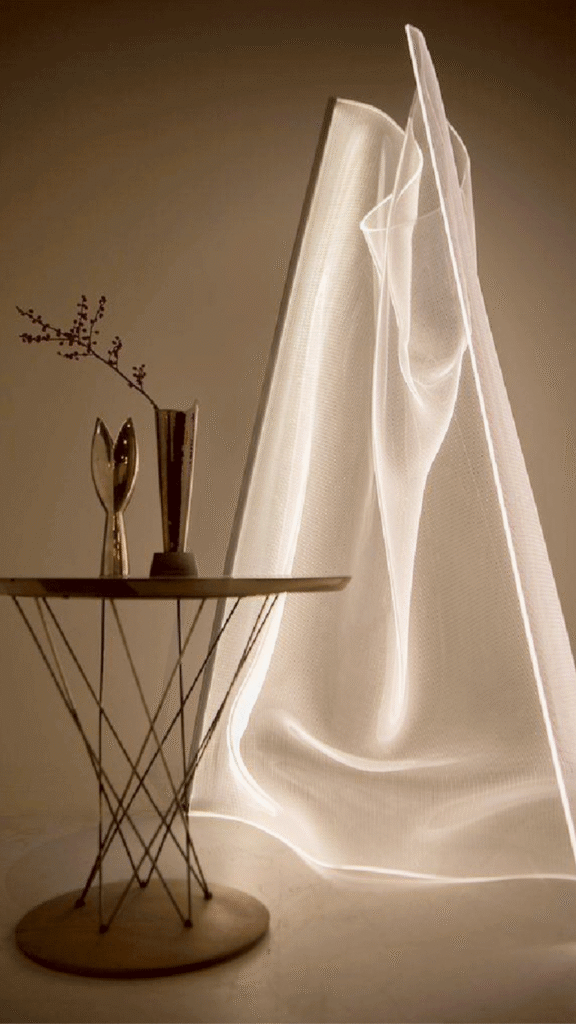
Technology, in short, is ready, but culture is not yet ready. In the face of such splendid technological progress, a bizarre clustering of random uses of light has emerged, soon insinuating itself into our homes as well, due to the increasingly easy accessibility of sophisticated equipment, such as home automation. But also because of the childish desire to play on one’s own with an element that appears amusing and harmless.
I think of sustainability, a theoretical concept universally shared but which, said quietly, in practice supports the wallet and the inert environment more than biological safety, including that of human beings. For decades, the scientific community has been warning especially lighting manufacturers and designers about the risks associated not only with the dissimilarity of artificial light compared with sunlight — our reference point, so to speak — but also with the widespread absence of professional design and management of all the issues that light carries with it. This happens because the design bridge between the fixture and the final user is often skipped, improvised by self-proclaimed connoisseurs of light, or entirely ignored.
Other aspects underestimated in contemporary artificial lighting practice, particularly domestic lighting — which, in my view, is the most critical — include the need for a soft and chromatically calibrated transition between daylight and darkness; low intensity during the hours of darkness, justified by the fact that in that condition our eye has much greater receptive sensitivity, known as scotopic vision; and a chromaticity that prolongs the sunset effect, which has nothing to do with romanticism.
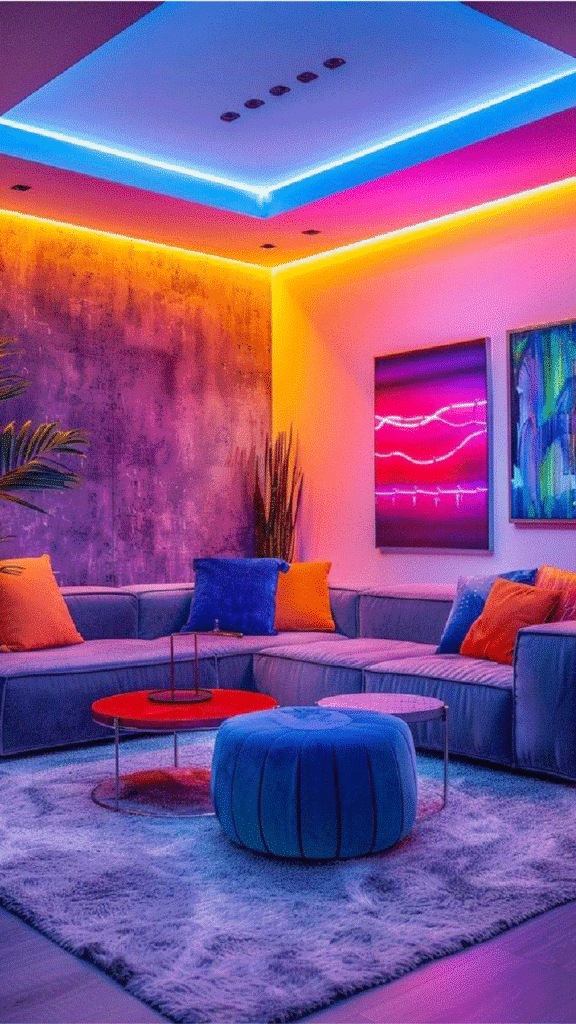
The indomitable conquest of the night and the consequent violation of our biological rhythm, or circadian rhythm, have in fact overflowed into too much light: arranged in space without coherence, too intense and contrasted, for dangerously prolonged periods, and with colors literally beyond the control of logic. All this occurs in a specific portion of the 24-hour cycle in which light should be physiologically banned, or at least managed with a shred of wisdom. Fortunately, pharmaceuticals and cosmetics offer, every following morning, an infinite range of palliative chemistry against the “side effects.”
A SIMPLE AND SOLID CONCLUSION
Smooth light is an expression of high-quality light, one that adheres to the granite-solid rules of the system of Life in all its beauty.
It is the evolved, conscious choice — entrusted to specialized expertise — made by those who lovingly defend their own well-being.
Text by:
Patrizia Stella De Masi
Architect, Senior Lighting Designer – PHOTONIKA
President, AILD


